CMOS, BSI CMOS, and stacked CMOS sensors are commonly used in smartphones, digital cameras, and professional camera systems. Each sensor type offers different advantages in image quality, low-light performance, speed, and video recording. This article explains how these image sensors work, their key differences, and where they are commonly used.
Catalog
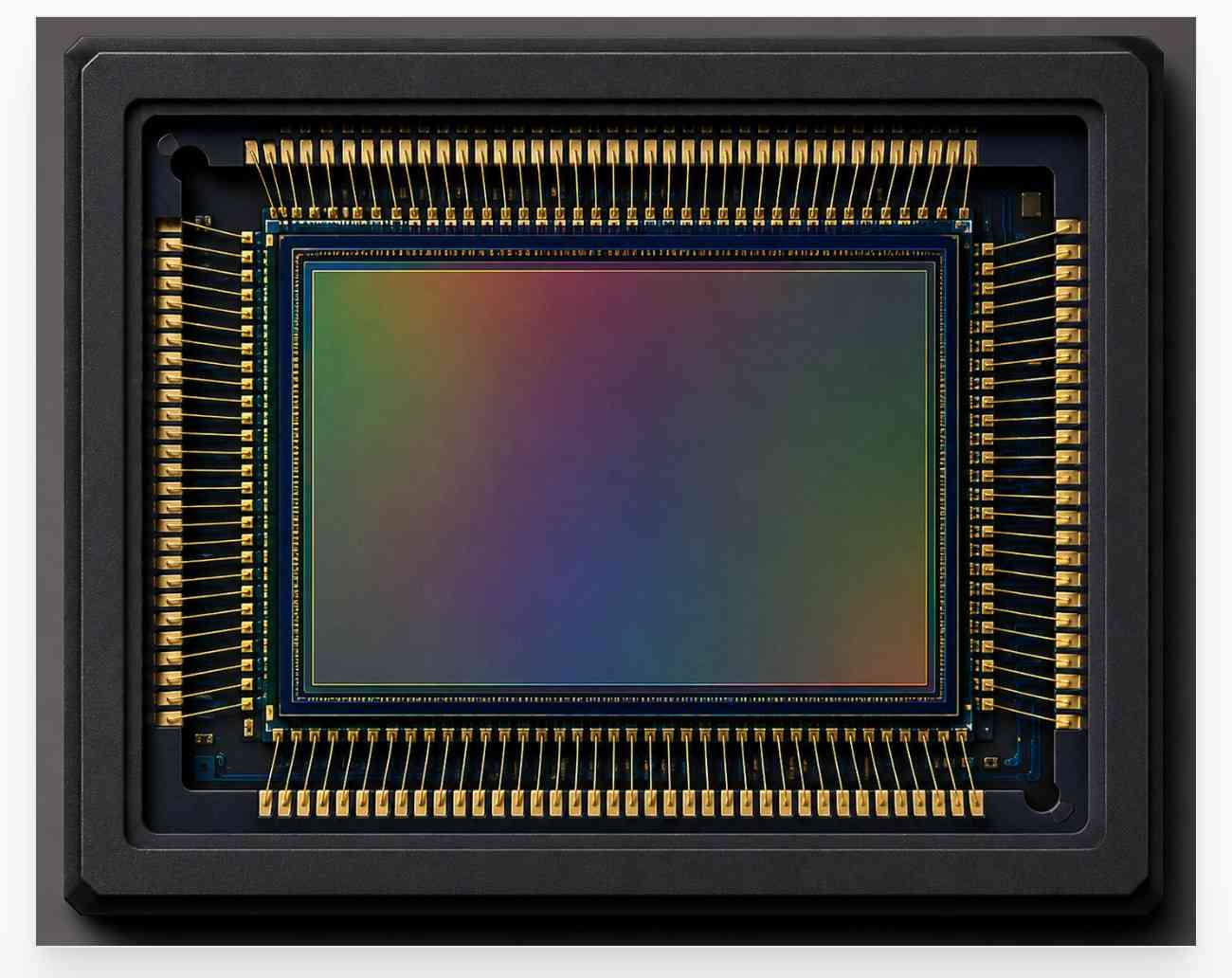
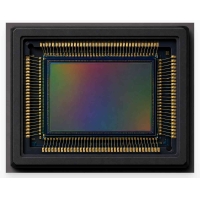
Figure 1: CMOS Sensor
CMOS Sensors
A CMOS sensor is the most common type of image sensor used in digital cameras and smartphones today. CMOS stands for Complementary Metal-Oxide Semiconductor. These sensors became popular because they are fast, energy-efficient, and cheaper to produce than older CCD sensors. CMOS sensors are widely used in smartphones, mirrorless cameras, webcams, and security cameras because they provide good image quality at a lower cost.
BSI CMOS Sensors
BSI CMOS stands for Backside-Illuminated CMOS. It is an improved version of a standard CMOS sensor designed to capture more light and improve image quality. BSI CMOS sensors are especially useful for smartphone cameras because they help produce brighter images, better low-light photos, and less image noise. Because of these benefits, many modern devices from companies such as Sony and Samsung use BSI CMOS technology.
Stacked CMOS Sensors
Stacked CMOS sensors are a more advanced type of CMOS sensor built for faster camera performance. These sensors can process image data much faster than standard CMOS and BSI CMOS sensors, making them useful for high-speed photography and advanced video recording. Stacked CMOS sensors are commonly used in flagship smartphones and professional cameras from brands like Canon and Nikon because they support features such as faster autofocus and smoother video capture.
A CMOS image sensor works by capturing light and turning it into a digital image. When light enters the camera lens, it reaches millions of tiny pixels called photodiodes that detect the light and convert it into electrical signals. The camera processor then changes these signals into a photo or video with color and detail. Because each pixel works separately, CMOS image sensors can process images quickly, making them widely used in smartphones, digital cameras, and security cameras.
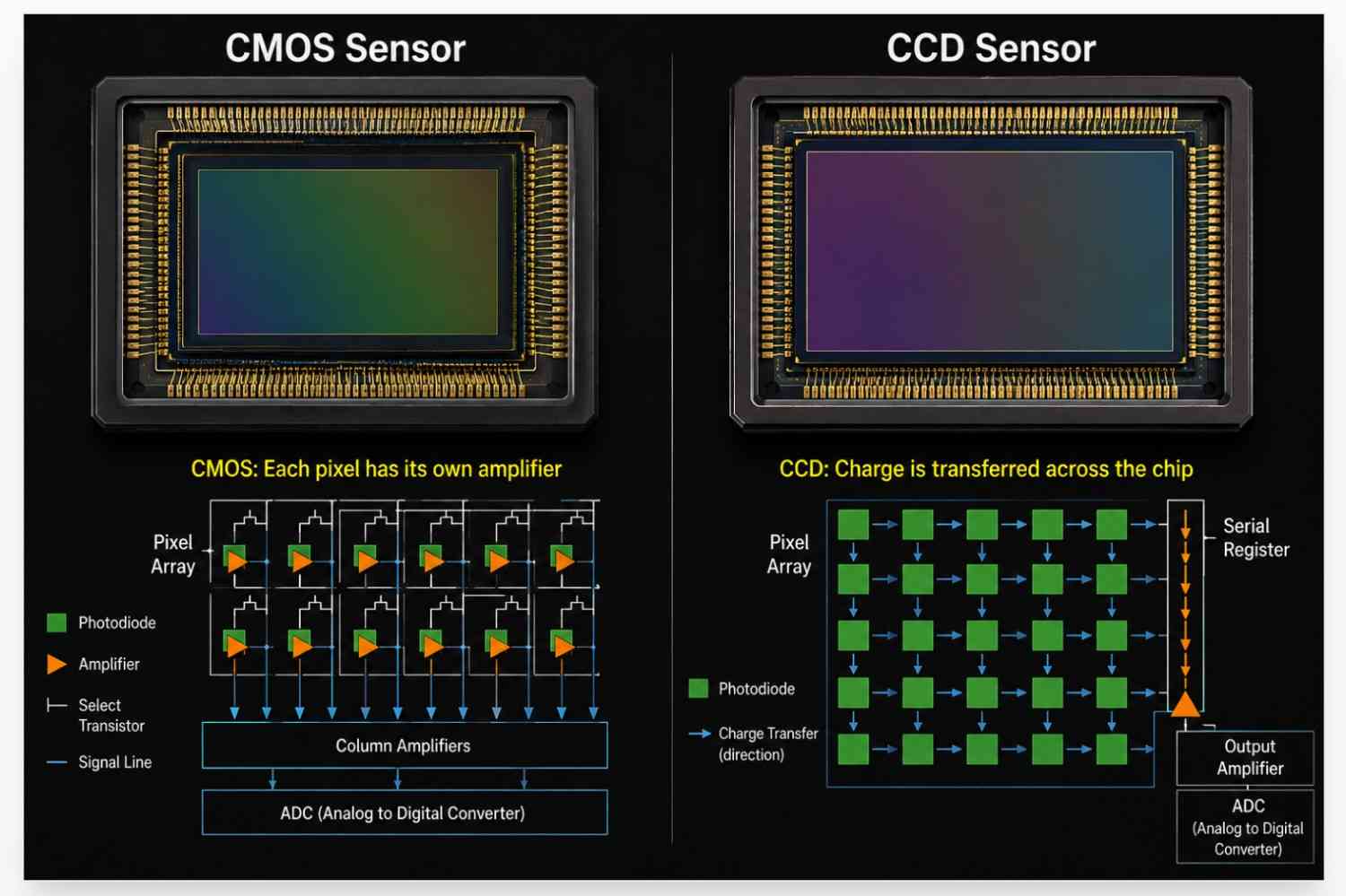
Figure 2: CMOS vs CCD Sensors
(insert table)
BSI CMOS sensors perform better in low light because they can capture more light than standard CMOS sensors. In a regular CMOS sensor, some incoming light is blocked by the wiring layer above the pixels, while a BSI CMOS sensor places the wiring behind the pixels so more light can directly reach the light-sensitive area. This improves image brightness, reduces image noise, and helps produce clearer photos in dark environments, making BSI CMOS technology widely used in modern smartphone cameras and digital cameras.
Stacked CMOS sensors are faster because they use a layered sensor design that separates image capture and signal processing into different layers. This structure allows the sensor to transfer and process image data more quickly than standard CMOS and BSI CMOS sensors. Faster data processing improves camera performance by supporting high-speed burst shooting, faster autofocus, smoother slow-motion video, and higher frame-rate video recording. Stacked CMOS sensors also reduce rolling shutter distortion because the sensor can read image data more efficiently during fast movement. Because of these advantages, stacked CMOS technology is widely used in flagship smartphones and professional cameras from companies such as Sony, Canon, and Nikon.
(insert table)
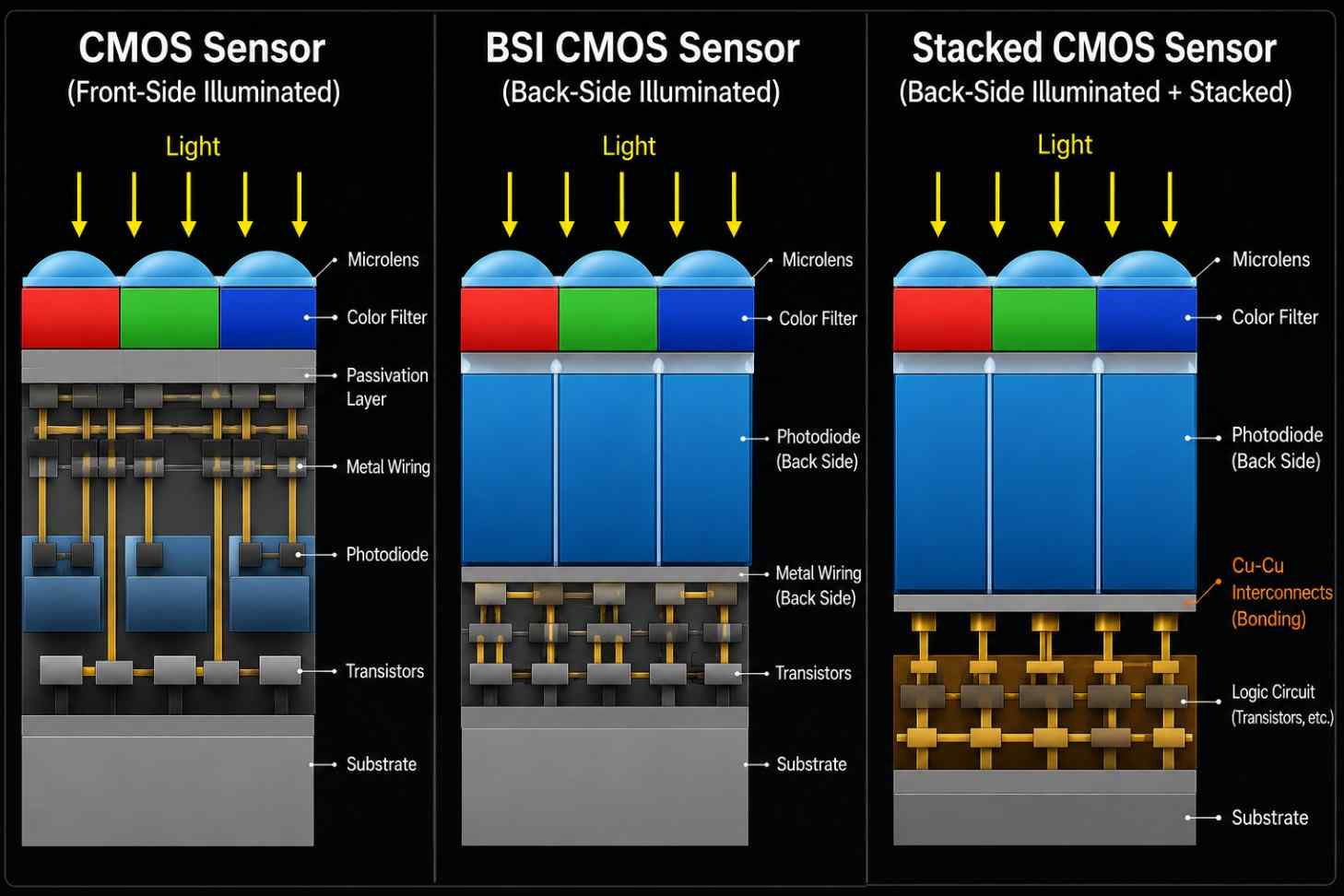
Figure 3: CMOS vs BSI CMOS vs Stacked CMOS Sensor
(insert table)
CMOS Sensors
• Smartphones and budget digital cameras — Commonly used because CMOS sensors provide good image quality at a lower manufacturing cost.
• Security and surveillance cameras — Used for continuous video monitoring due to low power consumption and fast image processing.
• Webcams and laptops — Help support video calls and online meetings with efficient image capture performance.
• Automotive cameras — Used in parking cameras and driver-assistance systems for real-time imaging.
BSI CMOS Sensors
• Smartphone cameras — Improve low-light photography, night mode imaging, and HDR photo quality.
• Mirrorless and DSLR cameras — Help produce brighter images with lower image noise in dark environments.
• Security cameras — Enhance nighttime surveillance and indoor image clarity.
• Compact digital cameras — Improve image brightness and detail in portable camera systems.
Stacked CMOS Sensors
• Flagship smartphones — Support faster autofocus, smoother slow-motion video, and high-speed image processing.
• Professional mirrorless cameras — Improve burst shooting speed and reduce rolling shutter effects during sports photography.
• High-speed video cameras — Enable faster sensor readout for advanced video recording and motion capture.
• Industrial and machine vision systems — Help process image data quickly for automation, robotics, and inspection systems.
CMOS, BSI CMOS, and stacked CMOS sensors each have different strengths in modern camera technology. Standard CMOS sensors are affordable and efficient, BSI CMOS sensors improve low-light image quality, and stacked CMOS sensors provide faster performance and better video capability. These sensor technologies are widely used in smartphones, digital cameras, and many modern imaging devices.
Ndani këtë postim